
Ever since I began to realize just how fundamental a role English plays in my life, I had wondered whether I would ever have a reason to learn another language. English had already given me access to virtually everything I wanted, so for a long time, I simply never had the motivation to start from scratch with another language.
That requires a little bit of context. I’m a 15-year-old Turk, born and raised in Turkey to Turkish parents. Unlike many people who grow up bilingual, I wasn’t raised in a household where another language was spoken alongside Turkish. English was something I acquired alongside Turkish while growing up, largely thanks to my parents, who exposed me to educational English content, encouraged me to shadow native speakers, and gave me plenty of exposure to the language from an early age.
As I grew older, English also became deeply integrated into the things I was interested in. Whenever I wanted to research something related to technology, programming, hardware, or practically any subject I happened to be curious about, English was usually the language in which the most information was available. Even today, it remains the dominant language for much of what I look up online. I therefore never really had to create a separate place for English in my life. It was already there, woven into the things I naturally wanted to do.
German was completely different.
There was no comparable place for German in my everyday life. I wasn’t surrounded by German-speaking people, I didn’t need it for my usual interests, and I couldn’t simply stumble upon enough of it by going about my day. If I wanted German to become a meaningful part of my life, I had to make it one.
And that is what made learning German such a different experience for me. Rather than simply adding another language to my life, I gradually started reshaping my routines, my media consumption, and the way I interacted with the things around me so that German could occupy a central place in them. For the first time, I wasn’t just learning a language; rather, I was deliberately building an environment in which the language could exist.
The story of how I ended up learning German really begins with the LGS, Turkey’s high school entrance examination, which I took in June of 2025.
My result was lower than I had expected. In fact, it was lower than my worst-case prediction. That put me in a somewhat awkward position, because almost all of the schools in Istanbul around my score range require students to complete a mandatory preparatory year, effectively turning high school into a five-year program.
The preparatory year itself is an unusual part of the Turkish education system. Its place within the official curriculum can feel… unclear at times. There are even cases where Ministry of Education resources provide information about the regular curriculum but make little or no reference to preparatory-year materials, such as the textbooks, PDFs, or lesson structures used during that year.
In practice, preparatory years are centered around the language of instruction. Most schools offer a preparatory program in the relevant foreign language, and, at least from everything I had seen and heard, there was also a rather peculiar tradition surrounding the exemption exam that supposedly allowed students to skip the preparatory year if they already had sufficient proficiency in that language. I had never actually heard of a student who was eligible to skip the year after taking one of these exams. Whether this was an intentional feature of the system or simply how it worked in practice, the result seemed to be the same: the exam existed, but students were rarely, if ever, allowed to use it to bypass the preparatory year.
For me, choosing an English-centric school would have been rather pointless. I had already grown up with English and was already comfortable using it for research, technology, entertainment, and everyday internet use. Spending an entire academic year going over material that was already familiar to me would not have added much to my abilities. Moreover, I did not want to spend a year in a setting where I had little incentive to stay mentally engaged. I wanted to preserve the study habits and discipline I had already developed.
So I chose a German preparatory school.
The reasoning was quite simple: if I was going to spend an entire year learning a language anyway, I might as well learn one that was actually new to me.
And that was how German entered my life.
I wouldn’t call the workload trivial. We had twenty German lessons a week, with each lesson lasting forty minutes. The timetable often followed a rhythm of four consecutive lessons, each separated by a ten-minute break. German was therefore not a small part of my schedule. It was a substantial part of both my week and my school year from the very beginning.
My school’s stated goal was to have us finish the Klett Klasse! A1 and A2 books by the end of the school year, and, to its credit, it has fulfilled that goal this year.
Nine months to go from absolutely no German to the end of A2 is, objectively speaking, quite a lot of time. People have passed C1 exams in less than that. Of course, there is a huge difference between passing a C1 exam and actually having a comfortable, well-established C1 level, but the point still stands: the pace of the school curriculum left plenty of room for me to go beyond what was being taught in class.
That said, although I had no prior knowledge of language learning as a discipline, I did seem to have a few advantages over the average learner.
For one, having a strong command of English made it surprisingly easy to recognize, recall, and, at times, even construct German vocabulary. This became particularly noticeable with words from technical or academic fields, where German and English often share recognizable roots or where English gave me a useful point of reference.
My childhood exposure to English also left me with a habit that turned out to be surprisingly useful: whenever I hear something in a language I am trying to understand, I automatically shadow it. I do not consciously stop to read it and then try to pronounce it again. I simply hear it and instinctively reproduce it. After years of doing this with English, it became almost automatic, and I carried the same habit over to German.
Related to that, I also seem to have an unusually strong tendency to notice patterns and connections. I say “seem” very deliberately, because I have no scientific basis for claiming that I am objectively better at pattern recognition than the average person. I can only say that I notice this whenever I learn something new, not just with German: I often find myself noticing recurring structures, word-building patterns, and grammatical relationships quite quickly.
I also had what might be an even more practical advantage: I was never particularly attached to the digital distractions that consume a lot of my generation’s free time. Minecraft and Reddit were, realistically, the only two things in my digital life that ever had much potential to become distractions I could sink too much time into, and even those were easy enough for me to put aside when I had something more important to do. I could therefore give them up in favor of German without feeling like I was sacrificing something I genuinely valued. Better yet, I could sometimes find ways to incorporate German into the things I was already interested in.
Finally, there were the study habits and discipline I had developed long before I ever touched German. I could sit down and study something for a long time, and more importantly, I could do it consistently. That turned out to be rather useful when the initial novelty of learning German wore off and progress became more dependent on simply putting in the work.
As one of my favorite parts of growing up with English immersion, Mickey Mouse once put it rather well:
“That’s a surprise tool that’ll help us later!”
It turned out that past me had, quite unintentionally, been preparing for German all along.
Throughout the year, I maintained a small but noticeable gap between what the curriculum covered and what I was actually learning. Not necessarily because I was dramatically ahead, but because I did not have much of a practical environment in which to use German. That made it surprisingly easy to forget how to handle a particular topic, or, even worse, to assume that I had been comfortable with it all along simply because I had once understood it.
Still, I kept up a consistent amount of German practice throughout the year. By the time the school year was coming to an end, around June 2026, I was not quite at B1 yet, but I was certainly beyond A2. More importantly, I had reached the point where I could see that the German I was learning at school was only the beginning.
Around the same time, I was becoming increasingly interested in coding, rocket avionics systems, and various other projects that I had started taking seriously. One of the things I wanted to experiment with was my Apple Watch. In particular, I wanted to make use of its cellular capabilities by building simple apps for it, such as a YouTube client or a Google Gemini client.
There was, however, a rather small problem.
My main computer was a perfectly capable gaming PC. By today’s standards, I would call it low-end, but that is mostly because the definition of “low-end” has become rather absurd. Compared with the decade-old laptops I had been using before it, it felt like a supercomputer. For coding, it was more than enough.
There was just one catch: when you want to develop for Apple devices, you need a Mac. Period.
So, despite having a perfectly good computer for practically everything else, I suddenly found myself needing a completely different machine just to enter Apple’s little walled garden. I won’t bore you with my failed attempts to set up a Hackintosh on my PC; after hitches with performance and compatibility, I had to accept that I needed a real Mac. In any case, this post is more about my German learning journey than a technical deep dive with a bit of German sprinkled in.
Eventually, I told my father about the problem. I explained that I could not really develop for Apple devices, particularly my Apple Watch, without a Mac, and then thought nothing more of it.
He, on the other hand, apparently had other ideas.
A few days later, he came to me with an offer: get to around B2 in German in roughly three months, and I would get the newest MacBook Air.
I did not see that coming. At all.
After getting over the initial surprise, I got to work. I needed a plan. My entire routine had to be reorganized around German, not in the sense that everything else in my life had to disappear, but in the sense that German needed to become a much larger part of what I was already doing.
Three months is not a particularly long time to gain control over a language. In a period that short, or really in any serious attempt to make substantial progress, consistency matters enormously. So I built myself a fairly intensive daily routine.
I wrote two texts of roughly 150 words each day. Sometimes they were paragraphs, sometimes letters, and sometimes they dealt with completely different subjects. I had AI choose the topics for me so that I would encounter as wide a range of subjects as possible instead of repeatedly writing about the same things. Once I had finished them, I had Claude Sonnet 5 evaluate them according to various German-language examination standards. (Example prompt available here) As of now, it has been giving me the most reliable results out of the models I had tried.
I did not just use these evaluations as a way of measuring my progress. I also used the feedback to actively improve my German. I would look at the mistakes and weaknesses the model identified, understand what I had done wrong, and then try to avoid making the same mistakes in my next texts. Over time, this turned the writing exercises into a feedback loop: I would write, get evaluated, identify my weaknesses, and then use that information to make the next piece better.
I also spent around twenty minutes a day speaking German with ChatGPT. I specifically mention ChatGPT because, at least in my experience, it was the strongest model for practicing spoken language at the time. With the right prompt, it can interrupt you and correct mistakes while you are speaking. (Example prompt available here) One limitation is that I’ve yet to find an AI model that can meaningfully evaluate accent and pronunciation with the same reliability as written grammar or vocabulary. That means this is one area where you still have to evaluate yourself to a significant extent.
Another twenty minutes went toward reading. I used German short-story books published by Dorlion Yayınları. This specific example only applies to Turkish, but I am pretty sure this concept would also be available in English-German. They take familiar stories, such as The Little Match Girl, and present them in both German and Turkish. The German text is accompanied by its Turkish translation on the same page, so if I got stuck on a word, I could look it up almost immediately. It is not the most demanding reading material in existence, but it was convenient, accessible, and useful for keeping a steady amount of German in my day.
The largest part of my routine was input. I spent roughly two hours watching YouTube videos on a variety of subjects. I particularly enjoyed channels such as Quarks and its sub-channel Quarks Dimension Ralph (both linked below), because they covered subjects I was already interested in, including science, technology, psychology, and health.
For the first couple of months, I also made a point of watching the news from tagesschau (linked below). I would get up at around 10 in the morning and watch the morning news, then watch the evening news again at around eight or nine. Later, I shifted more of that time toward channels like Quarks in order to broaden my vocabulary beyond everyday news language.
One recommendation I would make to anyone doing something similar is to watch tagesschau every day until you can understand roughly 80% of it. Aside from being excellent listening practice, it also gives you a much better sense of how life and current affairs are discussed in Germany.
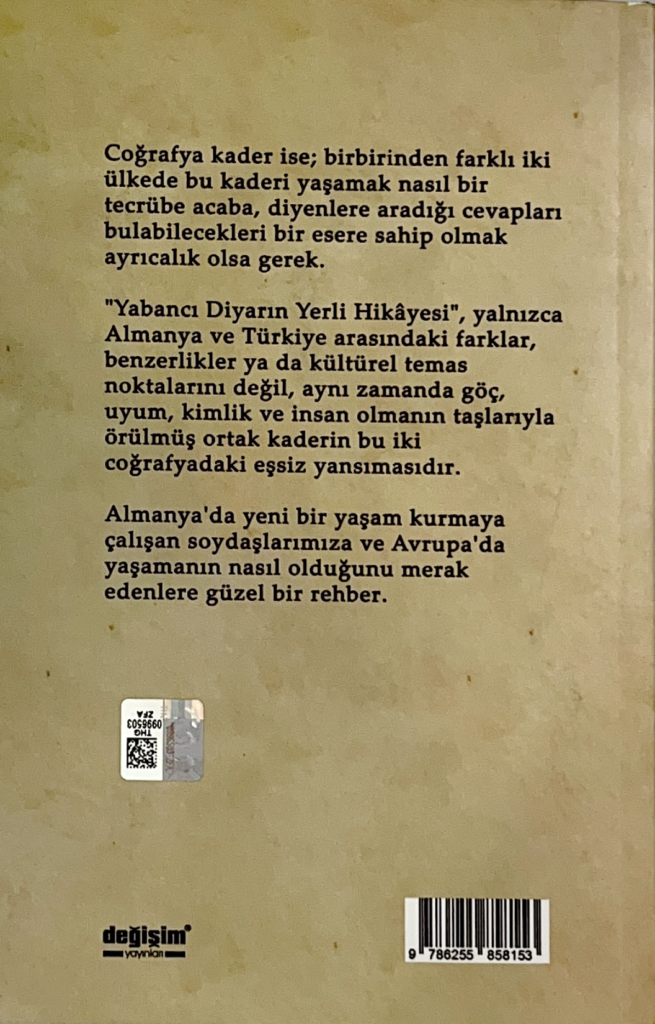
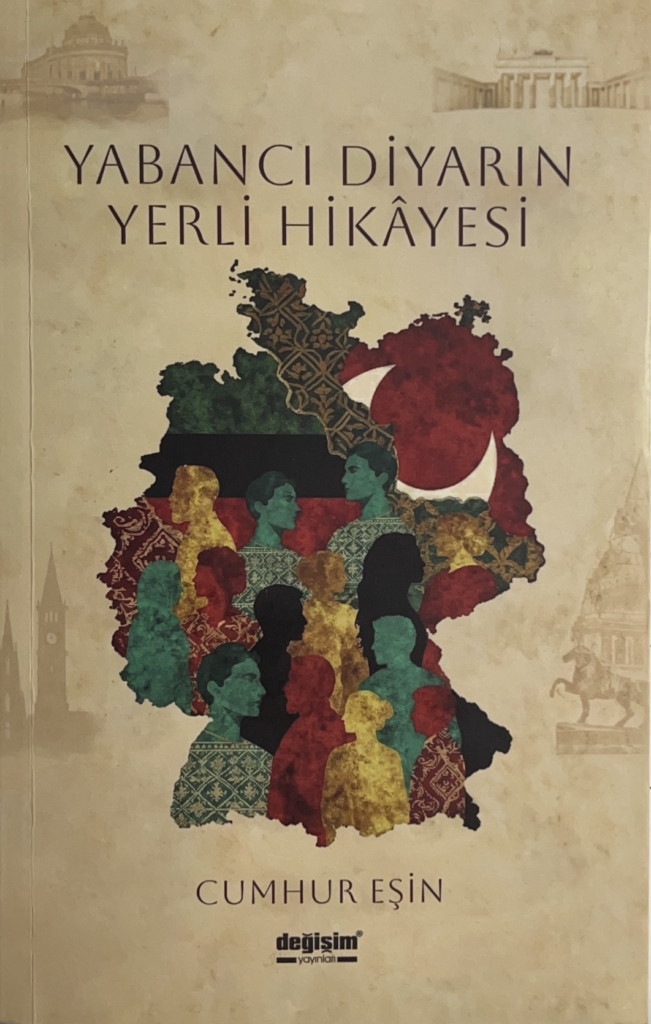
For Turkish speakers in particular, I would also strongly recommend looking into the excellent book Yabancı Diyarın Yerli Hikayesi (A Native Story of a Foreign Land) by Cumhur Eşin. He also runs a YouTube channel where he discusses Germany, its institutions, society, and everyday life from a perspective that can be particularly useful if you are trying to understand not just the language, but the country behind it. I found his material useful for filling in the cultural and practical context that language textbooks tend to leave out.
While watching videos, I used a browser extension called Trancy. It can display German subtitles alongside English or Turkish ones, allowing me to quickly check unfamiliar vocabulary without leaving the video. I could hover over a word to see its meaning, or select an entire sentence to see its meaning together with information such as pronunciation and emphasis. It also allowed me to save unfamiliar words into a vocabulary list. It supports exporting saved words to Anki, but I have never tried doing so, so I will spare you a claim I cannot verify.
I also changed the language of my devices to German. It is a small change, but it meant that I was constantly encountering German in places where I would normally have seen English or Turkish anyway. Even things as mundane as system menus, settings, buttons, and notifications became opportunities to reinforce vocabulary.
The same principle applied to the things I did for fun. I started playing Minecraft in German, for example, and it turned out to be surprisingly useful for vocabulary because I already knew what everything was supposed to mean. When you already understand the game itself, the German words become much easier to associate with their meanings. Of course, your mileage may vary. Whether this works well depends heavily on the game, the amount of text it contains, and how familiar you already are with what you are doing.
German YouTube resources
There are an absurd number of German-language channels on YouTube, so rather than listing everything I watched, I would divide my recommendations into three broad categories: channels specifically useful for learning German, channels focused on news and culture, and channels that are primarily about other subjects but are excellent sources of German input.
Grammar and structured German learning
Nicos Weg
Recommended level: A1-B1
Deutsche Welle’s free German course follows Nico through a continuous story while introducing vocabulary, grammar, listening exercises, and everyday situations from A1 through B1. Unlike the channels below, it is built as a structured course rather than a collection of individual lessons, making it a particularly good starting point if you want something you can follow from beginning to end.
Begi Begi
Recommended level: A0-A2/B1
A particularly good starting point for Turkish speakers. The channel has structured material from the absolute beginner level onward and explains German in Turkish, which can make the first steps considerably easier.
Deutsch mit Benjamin
Recommended level: A1-B2
A useful choice once you want more structured explanations from a German teacher. Benjamin covers grammar, vocabulary, pronunciation, and various aspects of exam preparation. His material also extends well beyond the beginner level.
Hacı Ahmet Altıner
Recommended level: A1-C1
Another particularly useful resource for Turkish speakers. The channel has extensive material covering grammar and other aspects of German from beginner through advanced levels. I found it especially useful when I needed a detailed explanation of a particular grammar point rather than a general lesson.
I would not recommend trying to follow all three channels as complete courses simultaneously. There is a lot of overlap between them. Pick whichever teaching style works best for you, and use the others when a particular explanation does not quite click.
News, culture, and general German
tagesschau
Recommended level: A2-B2+
German national news and current affairs. This was one of the most important parts of my listening practice early on. I would recommend watching it regularly until you can understand roughly 80% of what is being said. Apart from improving your German, it also gives you a much better sense of how current affairs and everyday topics are discussed in Germany.
Easy German
Recommended level: A2-B2
German-language learning, street interviews, and culture. The interviews are particularly useful because they expose you to natural conversational German rather than the carefully controlled language you normally encounter in a textbook.
Science, technology, and other subjects
Quarks
Recommended level: B1-C1
Science, technology, psychology, health, and general educational content. This was one of my main sources of input once I wanted to move beyond everyday vocabulary and news language.
Quarks Dimension Ralph
Recommended level: B1-C1
A related Quarks channel with a strong focus on science, technology, and other subjects. Particularly useful if you already have an interest in these areas, since learning vocabulary through subjects you already understand makes the German considerably easier to follow.
ARD Food
Recommended level: B1-B2
Food-related documentaries, experiments, recipes, and reports covering everything from nutrition and everyday products to how food is produced. The visual context makes much of the vocabulary relatively easy to follow, making it a good source of everyday German beyond traditional learning material.
Was kostet die Welt?
Recommended level: B2-C1
Business, economic analysis, and breakdowns of companies and their histories. I would save this one for later because the vocabulary is considerably more specialized than what you would encounter in everyday conversation.
der8auer
Recommended level: B2-C1
PC hardware, engineering, overclocking, and hardware testing. The technical vocabulary can make this challenging, but if you are already familiar with computers, the subject matter itself provides a huge amount of context. He also speaks very clearly and uses fairly clean German.
carwow.de
Recommended level: B1-C1
Automotive reviews, drag races, and car comparisons. Another good example of why watching content about something you already understand can make language learning easier. Even when you do not know every word, you usually have a good idea of what is being discussed.
The level recommendations above are only rough guidelines. You do not need to wait until you have officially reached a particular CEFR level before watching something. In fact, I think it is often better to start exposing yourself to material that is slightly above your current level, provided you can still understand enough from context to follow what is going on.
There is also a lot of German-related short-form content on platforms like YouTube Shorts. I did not use it as systematically as the resources above, but it can still be a nice way to get some extra German into your day. For Turkish speakers, Julia Graner is one example I would recommend checking out.
Especially for Turkish speakers, Telegram can also be a surprisingly useful source of German-learning materials. There are many channels containing materials for a wide range of German exams, as well as resources for learning German more generally. They are usually quite easy to find by searching for keywords such as “german,” “deutsch,” “deutsch pdf,” “telc pdf,” and similar terms.
German films and series
Once I had enough German to follow longer-form content, I started moving beyond YouTube and into German films and series. This was useful for a different reason: unlike educational videos, films and series are not trying to make themselves easy for language learners. The dialogue is more natural, people speak at different speeds, sentences are less predictable, and you are exposed to vocabulary and expressions that you would rarely encounter in a textbook.
Here are some German-language films and series I watched and/or researched, along with the CEFR level I would roughly recommend for each. These levels are my own estimates rather than official classifications, and the actual difficulty can vary significantly depending on factors such as whether you use subtitles, your familiarity with the subject matter, and your individual listening ability. I have personally watched some of the titles on this list, while others are recommendations I put together through research but have not watched myself yet. In those cases, I have tried to make the recommendations as accurate as possible, but I would still encourage you to do your own research rather than simply taking my word for it.
A2-B1
Lola rennt (1998) Not yet watched
A fast-paced thriller about Lola trying to get 100,000 Deutschmarks to her boyfriend within twenty minutes. The story is relatively easy to follow visually, and its repeated structure gives you several opportunities to hear similar situations expressed in different ways. This is probably one of the more accessible films on the list for learners.
Die fetten Jahre sind vorbei (The Edukators, 2004)
A film about three young people who protest against wealth inequality, consumerism, and the social order around them. It contains considerably more conversational and politically oriented language than Lola rennt, but the subject matter is still relatively approachable once you are comfortable with basic German.
B1
Das Leben der Anderen (The Lives of Others, 2006)
Set in East Berlin in 1984, the film follows a Stasi officer assigned to monitor a playwright and his partner. It deals with surveillance, art, politics, and personal morality, so it is also useful for picking up vocabulary related to history and politics.
B1-B2
Die Welle (The Wave, 2008)
A drama about a high-school teacher whose experiment in authoritarianism begins to spiral out of control. The school setting makes much of the dialogue relatively approachable, while its themes of conformity, group identity, and authoritarianism introduce more demanding vocabulary.
B1-C1
Good Bye, Lenin! (2003) Not yet watched
A tragicomedy set around the fall of East Germany. After Alex’s mother wakes from a coma following the fall of the Berlin Wall, he tries to convince her that the DDR is still functioning as it did before. Besides being useful German practice, it gives you a considerable amount of historical and cultural context.
B2
Das Experiment (The Experiment, 2001)
A psychological thriller loosely based on the Stanford prison experiment. The dialogue is substantially less learner-friendly than something like Lola rennt, and the subject matter can make some scenes rather intense. I would therefore leave this one until you are reasonably comfortable with conversational German.
Heldin (Late Shift, 2025)
A drama following a nurse during a difficult shift in a hospital. It is particularly useful for medical and workplace vocabulary, although parts of the dialogue are in Swiss German, which can make it considerably harder for learners accustomed only to Standard German.
Rams (2018)
A documentary portrait of influential German industrial designer Dieter Rams, exploring his work at Braun and Vitsœ as well as his ideas about good design, consumerism, and sustainability. The calm interview-heavy format makes the speech relatively clear, but the abstract discussion of design and philosophy introduces more specialized vocabulary.
B2-C1
Der Untergang (Downfall, 2004) Not yet watched
A historical drama depicting the final days of Nazi Germany and Hitler’s regime in the Führerbunker. It contains a large amount of military, political, and historical vocabulary, so I would not recommend it as an early learner film.
Die Fälscher (The Counterfeiters, 2007)
A historical drama about Jewish prisoners in a concentration camp who are forced to produce counterfeit currency for Nazi Germany. It combines everyday dialogue with historical, political, and prison-related vocabulary.
Die Therapie (2023)
A psychological thriller series based on Sebastian Fitzek’s novel. It follows a psychiatrist whose daughter disappears and a mysterious woman who later arrives seeking his help. The story makes considerable use of psychological terminology and dialogue in which understanding exactly what someone means can be important.
C1
Mephisto (1981) Not yet watched
A political drama following a German stage actor whose career rises as the Nazis come to power. The film deals with politics, theatre, morality, ambition, and complicity, while also using considerably more sophisticated language and historical context.
Die Blechtrommel (The Tin Drum, 1979) Not yet watched
A dense historical drama based on Günter Grass’s novel, following Oskar Matzerath against the backdrop of pre-war and wartime Germany. I would leave this one for advanced learners, particularly because of its literary style and subject matter.
The Zone of Interest (2023)
A historical drama centered on the Höss family living immediately next to Auschwitz. It is worth noting that the film is multilingual rather than purely German-language, so it is not a conventional German-learning recommendation. Nevertheless, a significant portion of the dialogue is in German, and its restrained style makes it an interesting choice once you are advanced enough to follow it comfortably.
Das Verschwinden des Josef Mengele (The Disappearance of Josef Mengele, 2025) Not yet watched
A historical drama about Josef Mengele’s life in hiding after the Second World War. The film is multilingual overall and deals with extremely serious historical subject matter, so I would consider it an advanced recommendation rather than something to use simply as beginner listening practice.
One important caveat: I would not take these CEFR levels too literally. A film labelled “B2” does not mean that a B2 learner will understand every line. Films are full of accents, reduced pronunciation, colloquialisms, cultural references, background noise, and vocabulary you would never encounter in a textbook. The point is not to wait until you are officially “ready” for a particular film. Rather, pick something challenging enough that you understand most of it while still having enough context to work out what you do not understand.
The main principle I followed was simple: learn German through things you would have wanted to watch anyway. It is much easier to spend two hours watching German content when the content itself is interesting to you.
All together, that gave me roughly four hours of structured German practice every day, on top of whatever German I happened to encounter incidentally. It was a lot, and it was tiring. I would finish some days feeling absolutely exhausted, only to sit down and do it all again the next day. For me, though, the consistency mattered more than the occasional exhaustion.
There are a few weaknesses in this approach that are worth mentioning, especially since I had another AI analyze my routine and point them out. I do not entirely disagree with its criticisms, but I also think some of them require a bit of context.
The first concern was whether I could realistically keep this routine up for three months. Spending around four hours a day on concentrated language practice for three months can obviously be mentally exhausting, and there is a legitimate risk of burnout. In my case, I really did find it tiring, but I was still able to return to the routine consistently. How sustainable a routine is depends heavily on the individual, so I would not recommend blindly copying my workload.
The second concern was the bilingual reading material. Having the Turkish translation immediately next to the German text makes it very easy to take the path of least resistance and look at the translation whenever a sentence becomes difficult. That can interfere with active recall. I agree with this criticism. The solution is straightforward: try not to look at the Turkish side unless you genuinely need it.
The same applies to the dual subtitles provided by Trancy. Having English or Turkish sitting directly underneath the German can encourage your brain to fall back on the language it already knows instead of actually processing the German. I noticed this myself after a week or two, and eventually started using German by itself much more often.
Finally, the AI pointed out that my routine was input-heavy. I was spending more time reading and watching than I was actively writing and speaking, so there was a risk that my passive comprehension would develop faster than my ability to produce German spontaneously.
I think that criticism is fair, but only to a point. When you still have major gaps in vocabulary and grammar, input is not optional. You need enough exposure to actually fill those gaps. If somebody already has a very strong vocabulary and a highly stable grasp of grammar, shifting the balance more heavily toward speaking and writing makes much more sense. I was not in that position. I still had plenty of things I needed to absorb before I could expect effortless output.
So this was the system I built.
It was not a perfect language-learning methodology, nor was it something I had carefully designed after studying linguistics or second-language acquisition. It was simply the most practical approach I could come up with when I was told, essentially, “Get to B2 in three months.”
Oh yeah, about that MacBook Air Pro! I haven’t taken any German certificate yet, but after three months of work, I have received the machine as promised. My parents had seen how seriously I was taking the challenge and how much work I was putting in, so they were comfortable giving me the Mac without needing an exam as proof. Erwarten Sie einen neuen Blogbeitrag!
This is a Mac, well-deserved.
A couple of comments here:
1. If you think you have the ‘shine’ about pattern-matching, you probably have it. Continue letting it to its work naturally :).
2. Learning a second (or even a third) language in high school is a wonderful thing. Fluency in another language does really make you another person. But, I would say, for the college/uni choices (you have time, don’t worry), don’t put German in the first place, because you learned it the latest. English is still the norm in almost every academic or business area in the world as you mentioned, and having an English-based uni degree can be more effective in today’s world.
3. Your “language-learning methodology” is a gem. Please continue documenting it.
4. Using AI in your daily endevours is great. Consider putting your Mac to learn setting-up and using local models. This may be an easy but eye-opening execise — also free tokens!
Keep up the great work, Keremcim. Viel Glück!
Thank you! 🙂
I definitely agree about English. German is not meant to replace it for me, especially academically or professionally. English is simply too deeply integrated into both of those worlds, and into my own life, for that. German is more about adding another language and everything that comes with it.
I’m also planning to keep documenting the methodology as I continue. It will be interesting to look back at it later and see which parts actually held up and which ones I ended up changing.
And local models are definitely on the list! I’ve already experimented with them a bit, but now that I have considerably more compute to play with, there is a lot more I want to try.
Thanks again for the advice and encouragement. Vielen Dank! 🙂